

Looking for Orofacial Myofunctional Therapy (OMT) in the Penrith Area?

What is Orofacial Myofunctional Therapy?
Orofacial Myofunctional Therapy (OMT) is an assessment and intervention approach that focuses on the function, coordination and resting patterns of the muscles of the face, lips, tongue and jaw.
These muscles are involved in a range of everyday functions, including speaking, chewing and swallowing, and their patterns of movement and rest can sometimes contribute to functional difficulties.
What does an OMT assessment look at?
Depending on the individual, an Orofacial Myofunctional assessment may explore:
- Tongue resting posture and movement
- Lip closure and resting posture
- Jaw movement and stability
- Oral movement and coordination
- Breathing patterns, including nasal and mouth breathing
- Chewing and swallowing patterns
- Oral habits (e.g., thumb sucking etc.)
- Speech sound production
- Structural and functional factors that may be influencing oral movement
We love helping and making a difference in children's lives!
Who may benefit from an OMT assessment?
An OMT assessment may be considered when a child or adolescent presents with concerns such as:
- Persistent speech sound difficulties
- Tongue thrust or forward tongue posture
- Open-mouth resting posture
- Mouth breathing
- Difficulty achieving appropriate tongue placement for particular speech sounds
- Difficulties with oral movement or coordination
- Atypical chewing or swallowing patterns
- Oral habits that may be affecting oral function
Not every child with these concerns will require OMT. Assessment allows the Speech Pathologist to consider the individual’s overall presentation and determine whether orofacial myofunctional factors are relevant to their difficulties.

What does therapy involve?
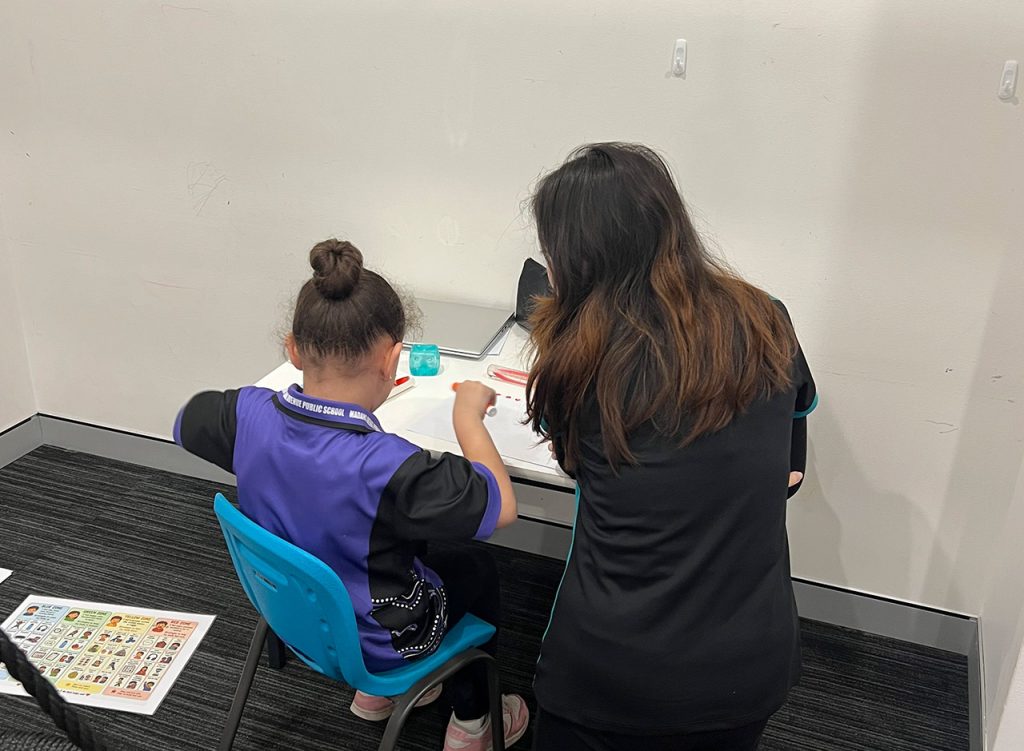
Where appropriate, therapy is individualised to the person’s needs and may include activities that support awareness, movement, coordination and functional use of the lips, tongue and jaw. Therapy may also address resting oral posture and functional patterns relevant to the individual’s presentation.
OMT does not occur in isolation. Where required, Speech Pathologists may recommend collaboration with other health professionals, such as dentists, orthodontists, ENTs or other relevant practitioners, particularly when structural, airway or dental factors may be contributing to the individual’s presentation.
Interested in finding out more?
If you have noticed concerns relating to your child’s speech, tongue posture, oral movement, mouth breathing or swallowing patterns, speak with our team about whether an Orofacial Myofunctional assessment may be appropriate.
