

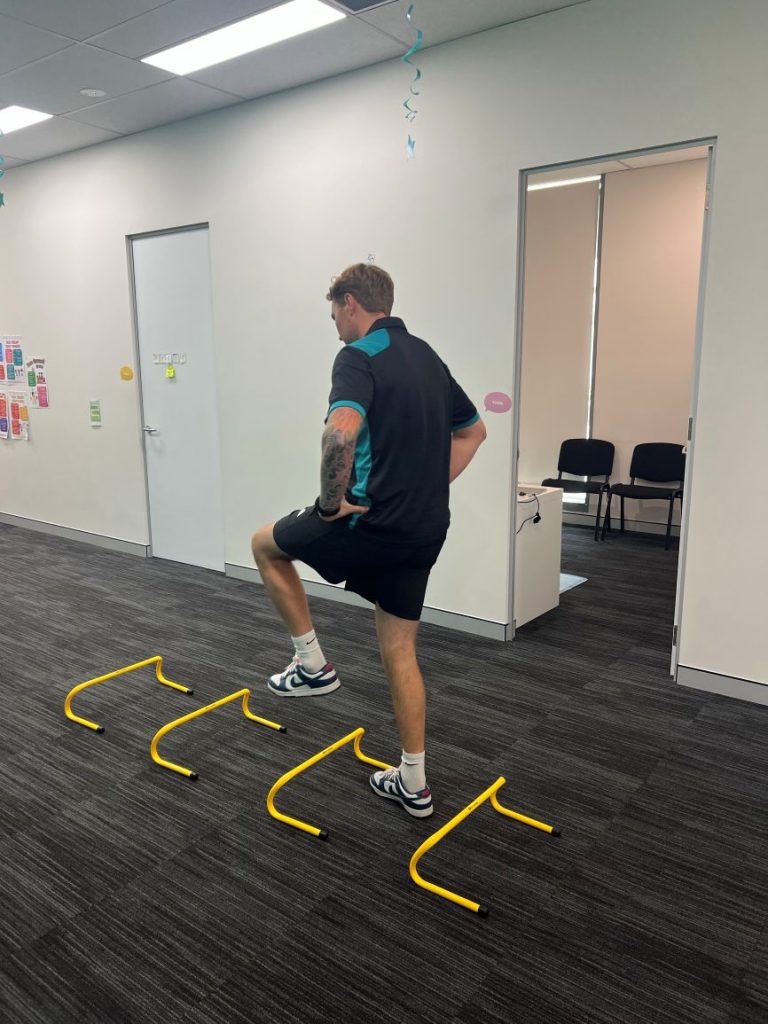
Children develop at their own pace, and some may need extra support to develop their strength, coordination, balance and confidence with movement. Exercise Physiology (EP) can play an important role in helping children with developmental delays build these skills through fun, individualised and goal-focused activities.
An EP can design exercise and movement activities around a child’s abilities, interests and everyday goals. Sessions may focus on areas such as strength, balance, coordination, gross motor skills, fitness and body awareness, while encouraging children to participate in activities they enjoy.
For children with developmental delay, improving physical skills can help support participation in everyday activities such as running, jumping, climbing, playing with friends, getting up and down from the floor, participating in sport and keeping up with their peers.
Importantly, exercise sessions don’t have to feel like exercise! EPs can use games, obstacle courses, sports, playground activities and play-based movement to help children develop their physical abilities in a fun and positive environment.
The goal is not simply to improve physical skills, but to help children become more confident, capable and willing to participate in movement and play.
At Nepean Speech and Occupational Therapy, our Exercise Physiologist works alongside families and other health professionals to create individualised programs that support each child’s unique goals and development.
